An official website of the United States government.

The .gov means it’s official.

It's Official icon
Federal government websites often end in .gov or .mil. Before sharing sensitive information, make sure you’re on a federal government site.

The site is secure.

It's Secure icon
The https:// ensures that you are connecting to the official website and that any information you provide is encrypted and transmitted securely.
Search results for

use it act data

Public Meetings

The PBRB has a YouTube Channel where we are posting videos of our public meetings: PBRB Videos

June 29, 2026

We would like to issue a correction to a slowly creeping media story. One of our public meeting slides described the low use of federal office buildings. The numbers we presented are getting misconstrued.

The USE IT Act data that is publicly posted on GSA’s website that is supposed to describe daily attendance is difficult to understand because of the way it is presented. What we found was that it only accounts for a total of around 275,000 federal employees, and we know that there are roughly 2 million employees PLUS an unknown number of contractors.

The point, therefore, is that the conclusions that can be drawn from the data are not generalizable to the entire portfolio. It’s a mystery as to why the rest of the space was not accounted for in the data set. The veracity of the data is unknown, as well. The website contains no explanation or data verification information.

Also, the USE IT Act data reports on the cost of the under-utilized space. What we found was that it ONLY reports on the cost of the space for an agency to bring its use up to 60% of the space that agency is allocated. It DOES NOT report on the cost of un-allocated space in a building that the taxpayer has to shoulder. Nor any of the allocated space over 60% that is not being used.

For more information or clarification, please reach out and we will do our best to explain.


June 26, 2026

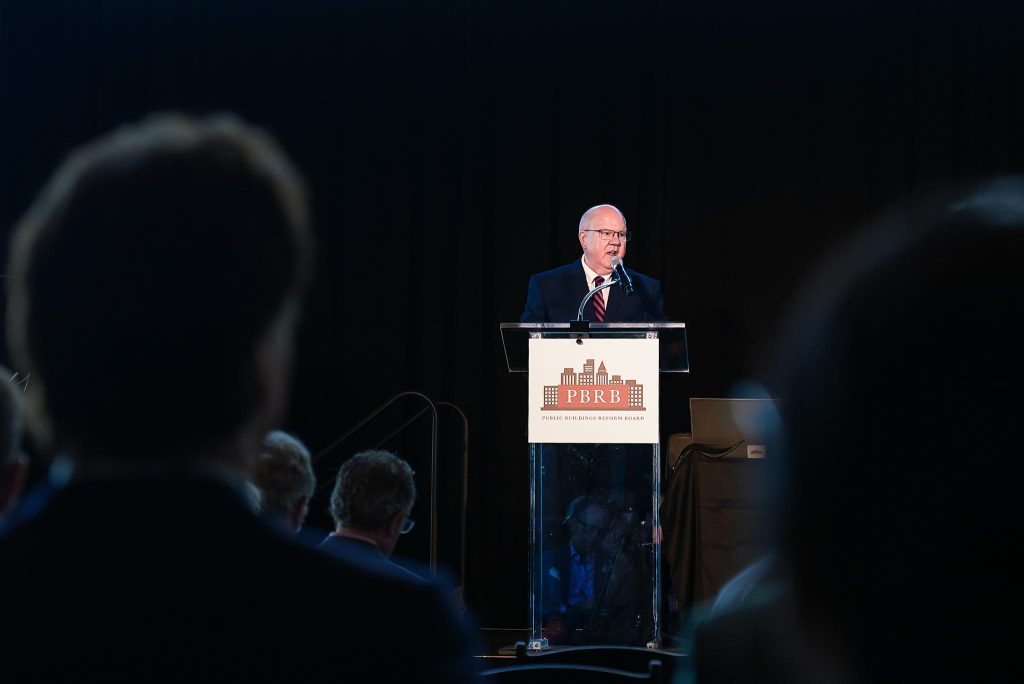
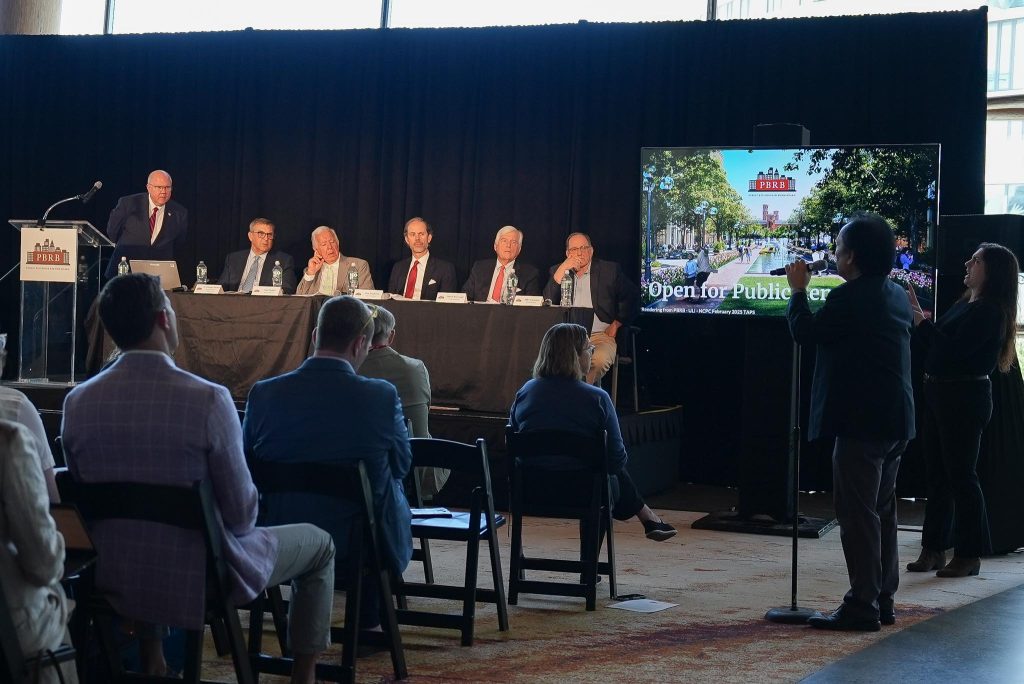
Yesterday, the Board hosted a public meeting in Washington D.C. to review its recent work analyzing federal properties for disposal.

The meeting focused on:

  • Real Estate utilization data released under the USE IT Act
  • Updates on federal properties across the nation being analyzed for disposal recommendations
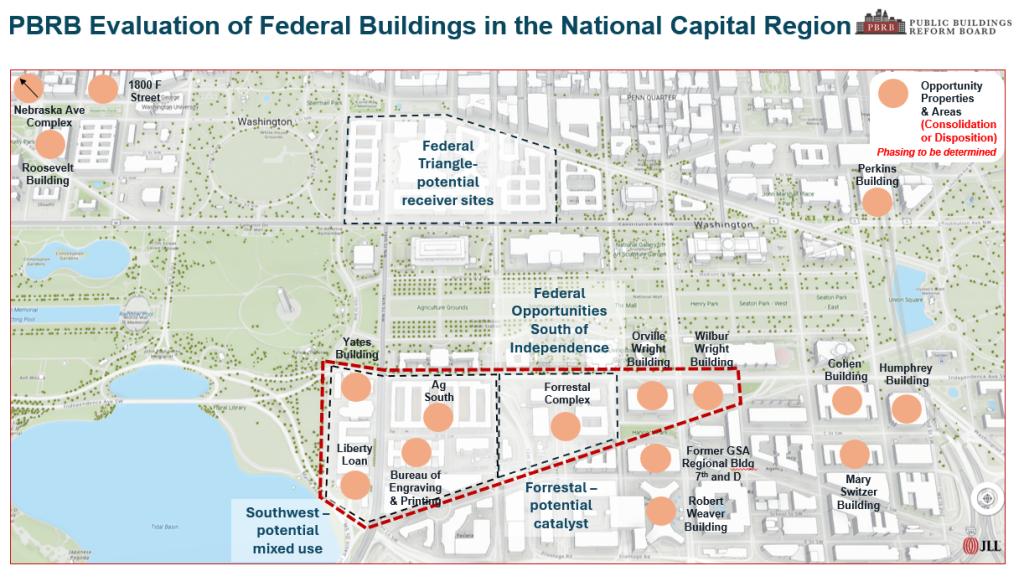
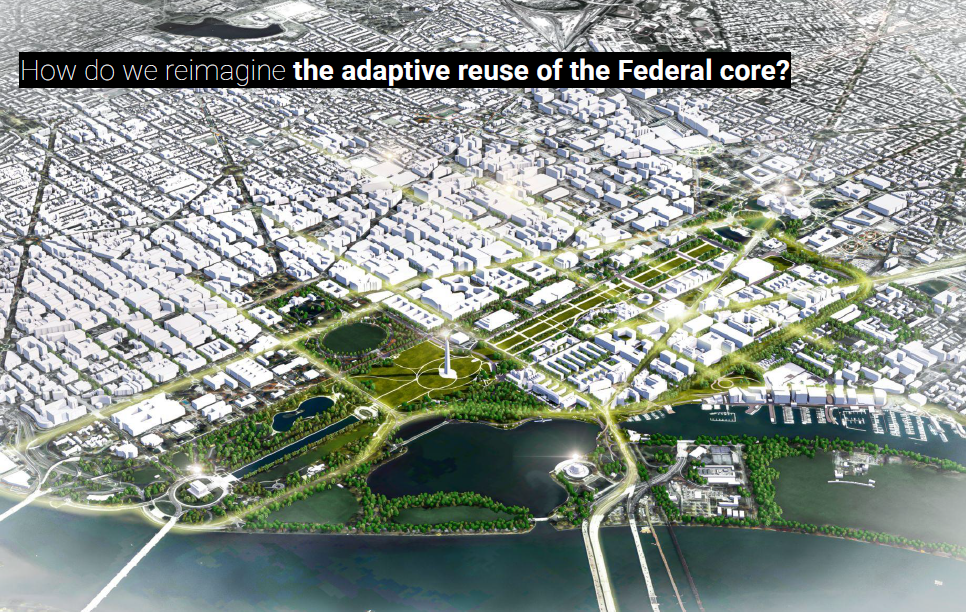
  • Challenges and opportunities presented by the massive underutilized federal portfolio in Southwest D.C.
  • Other potential disposal and consolidation candidates identified through PBRB’s continued work with the General Services Administration and other landholding agencies.

Slides for the meeting are posted below, and a recording of the meeting is below the slides.

A recording of the June 25, 2026 meeting can be found on our YouTube Channel: PBRB Videos

A transcript of our June 25, 2026 meeting can be found below.

________________________________

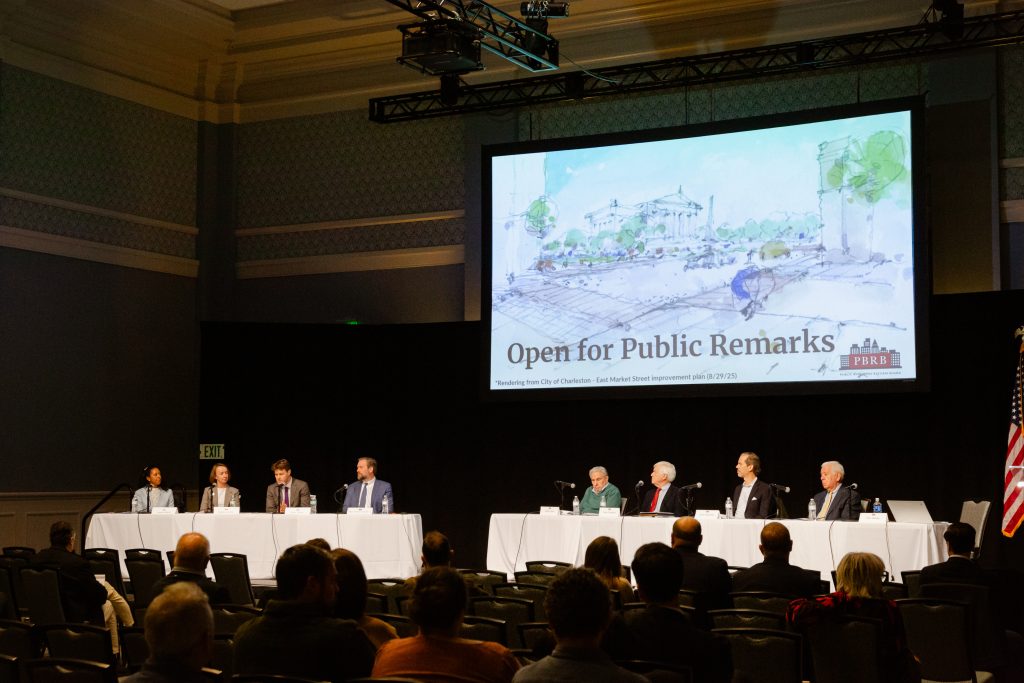
The PBRB hosted a public meeting on January 29, 2026, in Charleston, S.C. to seek public comment on properties located across the Southeast U.S. that are being considered for potential recommendations for divestment. The slides presented at the event are below.

Slides combined with audio for the meeting can be viewed here: https://youtu.be/eddvdTNoWHM

A transcript of the hearing can be found below, and slides from the hearing are below the transcripts.


Transcripts for the Board’s public meetings are posted below.

Past Public Meeting Transcripts

Public Meeting 11

July 30, 2025


Public Meeting 10

January 28, 2025


Public Meeting 9

July 11, 2024, Washington D.C.


Public Meeting 8

September 28, 2023, Washington D.C.


Public Meeting 7

October 28, 2021, Washington D.C.


Public Meeting 6
October 1, 2020, Virtual


Public Meeting 5
January 13, 2020, Washington, DC


Public Meeting 4
July 25, 2019, Denver, CO

Public Meeting 3
July 24, 2019, Laguna Niguel, CA

Public Meeting 2
July 16, 2019, Washington, DC

Public Meeting 1
June 17, 2019, Washington, DC

For the Press

For all media inquiries — please contact public_relations@pbrb.gov


June 26, 2026

The PBRB hosted a public meeting yesterday in Washington D.C.

The Board reviewed its work to date, the implications of underutilized and high maintenance buildings, and solicited comment on 34 properties that it is considering for a recommended disposition.

Slides from the event are below.

For more information contact: public_relations@pbrb.gov


March 5, 2026

The Board is issuing a new Interim Report today, “The Cost of Inaction: Deferred Maintenance in GSA’s Portfolio,” that describes how GSA’s portfolio of federal buildings may have up to $50 billion in deferred maintenance and repair liabilities. A press call will be held at 9:00 on Thursday, March 5, 2026. To register for the press call, please use this link: Press call with the Public Buildings Reform Board – Google Forms, or email Ray Weiss at public_relations@pbrb.gov for more information.

The report is below, and hanging below the report is a press release.


March 4, 2026

The Public Buildings Reform Board will be issuing a new Interim Report, “The Cost of Inaction: Deferred Maintenance in GSA’s Portfolio,” that describes how GSA’s portfolio of federal buildings may have up to $50 billion in deferred maintenance and repair liabilities. The Board will release its report on Thursday morning and host a press call. To register for the press call, please use this link: Press call with the Public Buildings Reform Board – Google Forms, or email Ray Weiss at rweiss@pughandtillerpr.com for more information.

More information is below


March 4, 2026

FOR IMMEDIATE RELEASE
PBRB Identifies Deferred Maintenance Liabilities Across GSA Portfolio
Taxpayers Are Paying the Price for Historic Underfunding

Washington, DC (3/5/26) — The Public Buildings Reform Board (PBRB) has identified
approximately $50 billion in deferred maintenance and repair liabilities across the federal real
estate portfolio managed by the General Services Administration (GSA).
PBRB’s new Interim Report, “The Cost of Inaction: Deferred Maintenance in GSA’s Portfolio,”
found that for decades GSA has been receiving maintenance and repair funds equaling about
0.375% of its portfolio’s functional replacement value, while industry standards recommend a
rate of 2-4%. The result is a portfolio “with deferred maintenance backlogs that increase building
lifecycle costs, accelerate asset deterioration, and degrade facility performance.”
“Congress is never going to be able to appropriate its way out of this problem,” says PBRB
Acting Chairman Talmage Hocker. “The only way to handle this is through a radical reduction in
the GSA’s portfolio size.”


“This mounting backlog of deferred maintenance and repair costs is crippling federal agencies’
ability to deliver on their missions and endangering the health, safety, and welfare of the federal
workforce,” notes Hocker. Recently, the Administrative Office of the U.S. Courts asked
Congress for authority to directly manage federal courthouses, which it described as “in crisis
[with] judges being trapped in elevators for hours, ceilings collapsing in courtrooms during trial,
and other issues.”


“Local leaders have warned that deteriorating or abandoned federal buildings are dragging down
struggling downtowns, eroding property values, and stifling economic recovery,” Hocker
continues. “The result is a system that cannot meet the nation’s needs, leaving taxpayers to pay
the price for historic underfunding of an underperforming real estate portfolio.”
To address both current liabilities and long-term stewardship, PBRB believes the federal
government “must strategically and aggressively reduce its property footprint through targeted
consolidation and divestiture of underutilized and high-cost assets.”


The PBRB Interim Report recommends eight urgent reform measures:
● Incentivize Action: Establish a clear and quick process where property sale proceeds are
directly programmed for subsequent planned sales, backed by consistent and timely
appropriations.
● Maximize Private Capital: GSA should access private capital through leases and other
public-private partnerships to consolidate the office footprint, lower total costs, and create
flexibility to meet the government’s uncertain and evolving office space needs.
● Reform the Federal Buildings Fund (FBF): The FBF is insufficiently resourced and
funded. GSA must aggressively pursue an adjusted “return on investment” (ROI) rent pricing policy to ensure agencies pay sufficient rent to cover required maintenance, and Congress
should fully fund GSA’s requests from the FBF.
● Align Capital Planning: End the strategy of prioritizing “Funds from Operations (FFO)
positive” assets, which forces certain buildings to financially support the rest of the portfolio,
and instead align capital decisions with taxpayer interests and mission needs.
● Adjust Federal Rules to Provide Better Decision Making: Adjust federal rules governing
cost/benefit analysis for leasing versus owning buildings, along with the budgetary scoring
rules so they better reflect current economic conditions and support more strategic,
cost effective choices.
● Increase Flexibility: Authorize mechanisms that permit agencies to utilize rent
appropriations or other operating funds for building shell improvements in exchange for rent
credits, increasing access to capital and streamlining project delivery.
● Improve Data: Mandate the collection of valid and reliable occupancy and daily use data,
along with accurate facility condition and maintenance data, to make rational, portfolio-wide
decisions on which assets to retain, consolidate, or divest.
● Establish Oversight: Congress should consider extending and perhaps expanding the
PBRB’s authorization to allow it to work with federal real estate agencies to continue to
identify properties that should be sold and engage with Congress to push ahead required
reforms.


“While federal agencies are now beginning to seriously consider the methods, locations, and
timing for implementing required changes, they must also recognize that the enormous amount
of property to be divested cannot be addressed all at once and a significant investment must be
made to ensure that each property is sold at the highest possible return,” Hocker explains.
“Funding for subsequent sales should come from property dispositions and agencies must work
with Congress to ensure appropriations are consistent and timely,” he continues. “With that in
mind, PBRB urges Congress to consider the FASTA [Federal Assets Sale and Transfer Act of
2016] recommendations for reducing the federal real property inventory, utilizing existing
properties more efficiently, and reducing the cost for maintaining these properties.”


For its Interim Report, PBRB initially assessed deferred maintenance of the federal portfolio
based on the age of buildings, which found that buildings aged 31-75 years have the highest
maintenance costs per square foot and account for the largest share of total square footage,
making them the most logical candidates for potential divestiture.


PBRB then conducted a quantitative evaluation to determine an independent estimate of
maintenance liabilities, sampling 11 buildings that were representative of the average
maintenance liability for the age group.


Finally, a comparison of GSA and PBRB deferred maintenance to Functional Replacement Value
ratios demonstrated that the aging segment of the GSA portfolio (57%) consumes a
disproportionate share of maintenance resources, diverting funds away from newer properties
that should remain cost-effective and fully viable.

The Public Buildings Reform Board (PBRB) was established as an independent, bipartisan
agency under FASTA to identify opportunities for the reduction and consolidation of the federal
real property inventory and reduce costs to the federal government. For more information, visit
https://www.pbrb.gov/.


The PBRB testified in front of the House Transportation and Infrastructure Committee yesterday. Our press release is below.

FOR IMMEDIATE RELEASE

PBRB Testifies $50 Billion Needed Now for Maintenance and Repair of Federal Buildings

GSA Only Receives $600 Million Annually to Address Skyrocketing Needs  

Washington, DC (12/11/25) — Approximately $50 billion is needed to immediately address the backlog of deferred maintenance and repair liabilities across the General Services Administration’s (GSA) real estate portfolio nationally, according to Public Buildings Reform Board (PBRB) member Michael Capuano.

In testimony delivered today before the House Transportation and Infrastructure Committee’s Subcommittee on Economic Development, Public Buildings, and Emergency Management, Capuano explained that total deferred maintenance for GSA’s portfolio will balloon to $546 billion in 10 years, using GSA’s own 27% rate of escalation. In stark contrast, GSA currently receives only about $600 million annually to address these skyrocketing needs.

“While Congress has sent a consistent and clear message to GSA to downsize its real estate portfolio in order to cut costs and save taxpayer dollars, it is unrealistic to expect GSA to shrink its portfolio so that $600 million is sufficient to bring federal property up to modern day expectations,” Capuano stated. “Even if GSA sold every possible property it owns, with the exception of land ports of entry, courthouses, and law enforcement facilities, current funding levels could not meet the maintenance and repair requirements of the remaining buildings.”

Despite these budget shortfalls, Capuano told the Subcommittee that PBRB “is continuing to identify federal properties with value and low use and recommend them as ‘first line’ opportunities for divestment. Revenues captured from these sales could then be used to fund subsequent consolidations and dispositions.”

Through its engagement with local real estate brokers, historic preservation groups, and municipalities throughout the country, PBRB has identified a number of federal properties to sell directly to local stakeholders. To seize on those market opportunities uncovered to date, PBRB is currently preparing a set of urgent property recommendations where potential buyers already have shown interest.  

To be truly effective, however, such an approach would require a much faster timeline than the one GSA normally operates under, as well as legal and policy changes to ensure market-timed dispositions were feasible. To that end, Capuano proposed extending PBRB beyond its current December 31, 2026, sunset date with amplified authority and budget to oversee and achieve the number of reductions required across the federal portfolio.

“Real estate opportunities don’t wait for slow processes,” explained Capuano. “By extending PBRB and strengthening its authority, Congress can ensure that an entity is positioned to act with the speed the market demands, identifying high-value opportunities to shrink the federal real estate inventory, modernize workplaces for federal employees, and save taxpayers billions of dollars in the process.”

Capuano added that moving federal agencies into leases could also help to address the deferred maintenance issue. “Because lease rates are down in many areas of the country, agencies may be able to find leases which cost less than what taxpayers currently pay in rent charged by GSA in GSA-owned buildings,” he testified. Lease costs are also known and predictable for the duration of the lease. They can be expanded or shrunk according to changing needs more quickly than buying or selling property.   

Capuano cautioned, however, that more affordable rents tend to drive down the value of real estate, potentially leading to lower proceeds from the sale of federal properties. In addition, vacating GSA-owned buildings and moving federal agencies into leases could result in a loss of rental revenue for GSA while presenting taxpayers with a bill for both the lease and the day-to-day operations of a largely unoccupied and undermaintained building.  

Concluding his testimony, Capuano stated that despite return-to-office mandates and passage of the 2024 Water Resources Development Act (WRDA) – which stipulates federal properties which did not meet a space use rate of 60% on average over a year would be required to be divested from the federal portfolio – PBRB found that many federal properties remain seriously underutilized.

Many federal agencies also appear to be having trouble collecting real data on daily use despite readily available technology that would support collection and produce the valid and consistent information required to effectively manage properties. “We understand OMB is pushing agencies hard to gather and provide the required occupancy information,” Capuano told Subcommittee members. “PBRB anxiously awaits access to whatever data any agency has in order to better assess various properties we have identified for possible disposition.”

The Public Buildings Reform Board (PBRB) was established as an independent agency under the Federal Assets Sale and Transfer Act of 2016 to identify opportunities for the reduction and consolidation of the federal real property inventory and reduce costs to the federal government. For more information about PBRB, visit https://www.pbrb.gov/.

# # #

Background on the PBRB

Because there has been some confusion and misunderstanding about the work being done by the Public Buildings Reform Board (PBRB) and other federal agencies which play a role in the oversight of the federal real estate portfolio, we have attempted to provide a brief overview of the role being played by PBRB, its responsibilities, and work it has done to date.   

PBRB’s Role and Responsibilities

  • Recognizing that there is a vast oversupply of poorly maintained, expensive, and underutilized federal office space – and that Congress cannot appropriate its way out of the capital expenditures accruing to the U.S. taxpayer from owning, leasing, and maintaining these properties – Congress passed the Federal Assets Sale and Transfer Act of 2016 (FASTA).
  • Among other initiatives, FASTA established the Public Buildings Reform Board (PBRB) in 2019 as an independent, bipartisan agency whose sole mission is to identify and recommend federal properties for sale, and to make recommendations for how to streamline the disposal process for those properties. 
  • PBRB’ recommendations for reducing the federal real estate portfolio offer a rare opportunity to yield triple bottom line benefits:
    • Selling federal buildings that are underused, in disrepair, or vacant will save U.S. taxpayers billions of dollars currently being paid for day-to-day operations and deferred maintenance.
    • Federal employees will be able to consolidate operations and work in modernized spaces that are safer, healthier, and more supportive of their day-to-day activities.
    • Buildings that are underused can be returned to their respective communities and developed to meet top community needs, which in turn enables municipalities to realize taxes on those properties (since federal properties don’t pay taxes to local municipalities).
  • PBRB has worked with commercial real estate firm Jones Lang Lasalle to analyze and identify the costs associated with the current federal real estate portfolio in selected markets and modeled the cost savings that could be achieved through various actions, such as consolidations into leased spaces and dispositions.
  • To date, PBRB has identified and recommended disposal of properties worth more than $450 million.
    • In its first report (the High Value Asset Report, issued in 2020), PBRB recommended 12 properties for disposal, of which 10 have been sold to date for a total of $193 million.
    • In its second report (the First Round Report, issued in 2021), PBRB recommended 15 additional properties for dispositions, worth approximately $275 million.
    • PBRB’s Second Round Report will be issued this year.
    • A third round of property divestment recommendations will be issued in 2026.
  • Money from the sale of federal properties recommended by PBRB and approved by OMB is received by the Asset Proceeds and Space Management Fund (which like PBRB was established by FASTA). GSA then has the authority to seek appropriations and spend those funds in preparation for further consolidations and dispositions under FASTA. Net proceeds from a disposition are retained by the federal agency owning the property at the time of its declared excess.
  • Under the Public Buildings Reform Legislation of 2025, PBRB will sunset on December 31, 2026.

Outside PBRB’s Purview

  • PBRB does not sell federal properties, nor does it dictate the use of property once it has been sold. While PBRB is empowered to provide expertise and recommendations to the federal government and Congress based on its best use analyses of the federal real property portfolio, it does not have decision-making power with respect to final consolidation, disposition, use, or redevelopment of these sites.
  • PBRB is not part of DOGE. PBRB was created under FASTA as an independent, bipartisan agency whose sole mission is to identify and recommend federal properties for sale, and to make recommendations for how to streamline the disposal process. Any pronouncements regarding federal buildings made by DOGE are independent of PBRB and not made in consultation with PBRB.    
  • PBRB is not a part of the Office of Management and Budget (OMB) nor the General Services Administration (GSA). PBRB’s recommendations are made with the expectation that Congress, GSA, OMB, and all other federal agencies will become much more active in seizing the opportunity presented by the current circumstances to consolidate and improve the federal real property portfolio.

News About the PBRB

Engineering News Record, October 20, 2026 (accessible): GAO Audit Finds Federal Office Data Omitted 20 million SF of Vacant Space


Washington Post, October 12, 2026 (not accessible): No Wonder the Government Can’t Offload this Building. Look Inside.


Washington Business Journal, September 17, 2026 (not accessible): House committee advances bill that could spare Wilbur J. Cohen Federal Building from sale


Maryland Matters, July 16, 2026 (accessible): As Trump administration offloads federal office space, what takes its place?


Federal News Network, July 9, 2026 (accessible): As Trump administration offloads excess federal office space, what takes its place?


Connectcre, July 6, 2026 (accessible): Boston’s McCormack Federal Building Tagged for Possible Sale


The Washington Times, July 1, 2026 (accessible): GSA sells California’s ‘Ziggurat’ federal building for record $207 million


Atlanta Business Chronical, July 01, 2026 (not accessible): Roundup: Peachtree Summit tenants may be kicked out…


The Mining Journal, June 30, 2026 (accessible): Federal waste of space stifles economies at many levels


Charleston City Paper, June 29, 2026 (accessible): Future of historic Custom House still in federal talks


AP News roundup: Washington Post editorial, June 29, 2026 (accessible): The federal government’s real estate problem


WGTJ Radio, June 29, 2026, (not accessible): More federal buildings closing?


PROPMODO, June 28, 2026 (accessible): Federal Property Maintenance Crisis Reaches $50 Billion as Buildings Deteriorate


NEWSMAX TV, June 28, 2026, (not accessible): NYTimes: Federal Buildings Plagued by Decay


Yahoo/WSB-TV, June 28, 2026 (accessible): 4 more federal buildings in Georgia face financial chopping block


NY Times, June 28, 2026 (not accessible): Rats, leaks and broken elevators: Repair backlog plagues federal buildings


Washington Post, June 27, 2026 (not accessible): The federal government’s big fat real estate problem


Connectcre, June 26, 2026 (accessible): Additional Washington Federal Properties Identified for Potential Sale


The New Republic, June 26, 2026 (accessible): The “Sistine Chapel of the New Deal” May Be Saved!


Atlanta Journal-Constitution, June 26, 2026 (accessible): Federal Government Could Sell Money Pits in Atlanta, Svannah and Athens


hoodline, June 25, 2026 (accessible): Feds Target Minneapolis’ Wellstone Landmark for Possible Sell-Off


CoStar, June 25, 2026 (not accessible): US government to debate fate of dozens of properties


Washington Times, June 25, 2026 (accessible): Report: No Federal building meets 60% occupancy standard required by law to stay open


Bisnow, June 25, 2026 (accessible): Federal Board Critiques ‘Piecemeal’ Approach to Selling D.C. Buildings


Urban Land, June 11, 2026 (accessible): Why Federal Building Reforms are Stalling


Nashville Post, June 9, 2026, (accessible): Convention Center Authority pays $52.03 for SoBro parcel


The Washington Times, June 1, 2026 (accessible): Feds sell second Southwest waterfront property as part of Trump downsizing of government


Christian Science Monitor, May 29, 2026 (accessible): Empty federal buildings are a growing problem — and an opportunity


Bisnow, March 26, 2026 (accessible): Energy Department to displace Education


COSTAR, March 25, 2026 (accessible): US government sells nearly 1 million-square-foot office building in DC


Washington Business Journal, March 24, 2026 (behind paywall): GSA sells Southwest DC’s 1 million-square-foot Regional Office Building


Washington Business Journal, March 13-19, 2026 (behind paywall): Interest Down for Federal Offices


Bloomberg, March 8, 2026 (accessible): The Federal Real Estate Maintenance Backlog is Over $50 Billion


FEDweek, March 8, 2026 (accessible): Deferred Federal Building Maintenance Gets Renewed Attention in Report, Hearing


Federal News Network, March 6, 2026 (accessible): “Radical reduction” of GSA-owned buildings needed to address growing maintenance backlog, panel finds


Detroit Free Press, March 6, 2026 (accessible): PBRB Identifies Deferred Maintenance Liabilities Across GSA Portfolio


CoStar, March 6, 2026 (accessible): US government property portfolio needs $50billion in deferred upkeep


The Business Journals, March 6, 2026 (behind paywall): Deferred maintenance costs dampen buyer interest in federal buildings, reform board says


hoodline Washington D.C., March 5, 2026 (accessible): Crumbling Fed Offices Send DC Buyers Running


Post and Courier, March 5, 2026 (accessible): Selling these Columbia federal properties would save more than $275M over 30 years, report says


Washington Times, March 6, 2026 (accessible): Watchdog flags $50 billion in ‘unsustainable’ maintenance backlog at federal buildings


Washington Business Journal, February 19, 2026 (behind paywall): Viewpoint: Speed shouldn’t trump value in GSA sales


JAXTDY (Jacksonville Today Newsletter), February 2, 2026 (accessible): Jacksonville’s 60-year-old federal building could be sold | Jacksonville Today


Atlanta Journal-Constitution, February 2, 2026 (behind paywall): https://www.ajc.com/news/2026/02/whats-next-for-two-savannah-architectural-landmarks-feds-consider-sale/


ABC Charleston, SC local affiliate, January 30, 2026 (accessible): https://abcnews4.com/news/local/historic-charleston-custom-house-could-reopen-to-public-under-federal-review-south-carolina-local-story


The Post and Courier Columbia, January 29, 2026 (accessible): https://www.postandcourier.com/columbia/business/columbia-sc-federal-building-strom-lease/article_540c5a14-8baf-4f72-9361-e7368097092c.html


2026

The Post and Courier Columbia, September 23, 2025 (accessible): Feds considering sale of 2 downtown Columbia properties


Savannah Morning News, September 22, 2025 (behind paywall): On Our Radar: Savannah seeks input on zoning reform for west side neighborhood


News2, September 17, 2025 (accessible): Federal government could relinquish ownership of Charleston’s U.S. Custom House


Post and Courier Columbia, September 17, 2025 (accessible): Feds may sell one of Charleston’s most prominent buildings


Jacksonville Business Journal, September 16, 2025 (behind paywall): Federal governments property portfolio shift could create opportunities for local developers


The Daily Signal, August 8, 2025 (accessible): Trump Administration moves to slash federal building space. How much could that save taxpayers?


Washington Business Journal, September 15, 2025 (behind paywall): The Federal Center SW landscape is poised for big change


The Business Journals, September 12, 2025 (behind paywall): Federal Center SW Redevelopment gains momentum as GSA eyes sales


Federal News Network, September 9, 2025 (accessible): Mold, pests and broken elevators: Federal employees wary of return-to-office conditions


Washington Business Journal, September 4, 2025 (behind paywall): Viewpoint: Connect the Wharf to the Yards – not the National Mall


The Business Journals, August 27, 2025 (behind paywall): USDA South Building disposal plan complicated by recent renovations


Providence Business First, August 1, 2025 (behind paywall): New Bedford Mayor to Feds: Spare the Historic Custom House


Boston Business Journal, July 31, 2025 (behind paywall): Boston’s empty federal buildings are ripe for re-use


Boston Globe, July 31, 2025 (behind paywall): The Federal government could soon sell these three big downtown Boston buildings


1420 WBSM, July 30, 2025 (accessible): New Bedford Mayor blasts plan to close U.S. customs house


New Bedford Light, July 30, 2025 (accessible): Custom House considered for closure – again


Bisnow Boston, July 30, 2025 (behind paywall): Federal board considers offloading three downtown office buildings


The Standard-Times, July 30, 2025 (accessible): New Bedford’s U.S. Customs House is being considered for closure. Mayor Jon Mitchell opposes


NewsChannel 5 Nashville, June 23, 2025 (accessible): The Estes Kefauver Building faces an uncertain future


Business Journals, June 18, 2025 (behind paywall): Fedeal real estate sell off could yield land banking


FedGovToday podcast, June 5, 2025: From Empty desks to smart defense – shrinking the federal footprint


Bizjournals, South Florida, June 2, 2025 (behind paywall): Brickell plaza building in Miami approved for disposition


Bizjournals, Washington, May 30, 2025 (behind paywall): Trump administration OK’s expedited disposal of Greater Washington federal properties


Tennessean, May 30, 2025 (behind paywall): Estes Kefauver federal building approved for divestment


Bisnow, May 23, 2025 (behind paywall): This week’s Atlanta Deal Sheet: Feds May Put For-Sale Sign on Downtown Tower


Allwork Space News, May 23, 2025 (accessible): U.S. Federal Government Plans to Shed 11 Underused Offices to Save $5.4 Billion


Law360 Real Estate Authority, May 23, 2025 (behind paywall): Fed Board Recommends Dumping 11 Buildings to Save $5.4B


AllSides, May 22, 2025 (accessible): Peachtree summit Building’s potential sale could jolt downtown


The Business Journals, May 22, 2025 (behind paywall): Federal board recommends sale of Energy Department’s massive Independence Avenue HQ


Atlanta Journal-Constitution, May 22, 2025 (behind paywall): Potential sale of landmark Atlanta federal building could jolt downtown


The Business Journals- Atlanta Business Chronicle, May 22, 2025 (behind paywall): Federal workers could vacate Downtown’s Peachtree Summit building


The Boston Globe, May 22, 2025 (behind paywall): As US government looks to downsize, downtown Coast Guard building could go up for sale


The Tennessean, May 22, 2025 (accessible): Downtown Nashville’s Estes Kefauver Building on chapping block in federal closures. Here’s why.


CoStar, May 22, 2025 (accessible): US government considers shedding more offices around the country to save money


Federal News Network, May 22, 2025 (accessible): Energy Department headquarters among 11 properties board urges Trump administration to sell


Bisnow, May 22, 2025 (behind free paywall): Federal Buildings Board Calls for Disposing of 7M SF of Properties


Citybiz, May 22, 2025 (accessible): PBRB identifies 11 Federal Properties for Consolidation and Disposition


The Washington Times, May 22, 2025 (accessible): Watchdog recommends axing 11 government properties including several agencies’ headquarters in DC


Washington Business Journal, May 6, 2025 (behind paywall): D.C. Mayor Muriel Bowser unveils ‘growth agenda’ tied to fiscal 2026 budget


Washington Business Journal, April 17, 2025 (behind paywall): GSA restarts search for private brokers to handle federal leasing deals


Federal News Network, April 17, 2025 (accessible): Agencies must be where the people are, Trump alters priorities in relocating federal buildings


Washington Business Journal, April 4, 2025 (behind paywall): Viewpoint: I chair the board tasked with divesting federal buildings. Here’s our mission.


Federal News Network, April 1, 2025 (accessible): Federal real estate disposition – Means and methods


Cleveland.com, March 27, 2025 (accessible): U.S. Rep Shontel Brown objects to feds’ plan to sell the Celebrezze building in Cleveland


Bisnow, March 24, 2025 (behind paywall): GSA Releases New List of Properties Slated for ‘Accelerated Disposition’


WFIT Public Radio, March 14, 2025 (accessible): Florida Sen. Moody: Move NASA’s headquarters from Washington D.C. to the Space Coast


NewsRadio, March 14, 2025 (accessible): Senator Pushes Bill to Relocate NASA Headquarters to Florida’s Space Coast


NBC Boston, March 14, 2025 (accessible): We got un-DOGE’d: Inaccurate info discovered in claimed taxpayer savings


Florida Today, March 13, 2025 (accessible): Florida Sen. Moody: Move NASA’s headquarters from Washington, D.C., to the Space Coast


The Art Newspaper, March 13, 2025 (accessible): Diplomacy museum and buildings designed by Breuer and Mies van der Rohe among hundreds of US federal properties briefly listed for sale


Bisnow, Washington D.C. National Real Estate News, March 5, 2025 (behind paywall): Trump Administration Identifies 80M SF Portfolio of Buildings It Could Sell


Bloomberg, March 4, 2025 (behind paywall): Trump Seeks to Put 443 Federal Properties Up for Sale


Washington Examiner, February 21, 2025 (accessible): Trump is remaking, not breaking, DC


Bisnow, February 21,2025 (behind paywall): REPORT: 2 San Francisco Office Buildings on DOGE Chopping Block


Atlanta News First, February 20, 2025 (accessible): Use it or lose it: Five Atlanta federal buildings at risk of being sold if workers don’t return


NBC Washington, February 5, 2025 (accessible): Feds look to unload office space as workers face pressure to resign or return


Washington Post, February 3, 2025 (behind paywall): D.C. sees neighborhood revival in Trump plan to downsize federal footprint


Bisnow, Washington, D.C. Real Estate News, January 28, 2025 (behind paywall): Federal Buildings Board Sees 250 Acres South of National Mall as Next Redevelopment Frontier


Washington Business Journal, January 28, 2025 (behind paywall):Public Buildings Reform Board eyes underused federal properties – Washington Business Journal


January 8, 2025 The Biden Administration Approves the Extension of the PBRB to Continue its Vital Work of Seeking Federal Real Estate Portfolio Optimization

S. 4367, the Thomas R. Carper Water Resources Development Act of 2024 was signed into law
on Saturday January 4, 2025, and includes a key provision that will extend the work of the
Public Buildings Reform Board until December 2026. The House and Senate have also
included provisions in the legislation that set occupancy standards for Federal office space
directing the sale of under-utilized space. The bill also calls for a review by the Government
Accountability Office of General Services Administration’s Public Buildings Service which
oversees the bulk of the Federal civilian real property portfolio. Finally, the bill calls for greater
transparency on public buildings project cost overruns and leases, along with the effect of crime
on Federal building usage.


The PBRB will continue to work diligently to identify underused Federal buildings that would
better be returned to private ownership, thereby reducing the cost of operations and
maintenance and capital liabilities to the American taxpayer. The PBRB will present its list of
recommended dispositions to the Office of Management and Budget, as required by law, and is
looking forward to working with Federal agencies to identify potential dispositions from their
portfolios.

National Law Review, January 7, 2025 (accessible article): Federal Building Reconfiguration and Redevelopment May be Ripe for Federal/District Collaboration


Federal News Network, January 6, 2025 (accessible article): Federal buildings disposal board gets more time to address underutilized space

2024

Federal News Network, December 13, 2024 (accessible article): DOGE amplifies federal buildings disposal board’s plan to save billions


Washington Post, November 12, 2024 (behind paywall): Washington has a housing crisis. The Feds need a creative solution.


Business Insider, November 3, 2024 (accessible article): Washington DC is full of obsolete government buildings. See how one is being transformed into hundreds of luxury apartments.


Federal News Network, July 16, 2024 (accessible article): Federal buildings board: Agencies can save billions by shedding ‘vastly underutilized’ office space


New York Times, May 22, 2024 (behind paywall): Businesses in D.C. Blame the Government for the District’s Empty Offices


Washington Examiner, May 13, 2024 (accessible article): Government employees need to get back to work


Washington Times, May 13, 2024 (accessible article): “Is this a weak president?” A year after pandemic, Biden can’t get federal workers back to office


Dailymail UK, May 7, 2024 (accessible article): Biden administration bizarrely spins empty office epidemic as a way to SAVE energy…but taxpayers footing a $5 billion per year bill aren’t fooled


Fedweek Report, April 23, 2014 (accessible article): Underuse of Federal Office Space at ‘Unprecedented’ Levels


Federal News Network, April 23, 2024 (accessible article): The agency imperative to manage real estate more effectively


Federal News Network, April 22, 2024 (accessible article): Agencies’ headquarters in DC remained ‘nearly empty’ in 2023 real-estate board finds


Bizjournals, April 22, 2024 (article behind a paywall): Viewpoint by Shalom Baranes: Don’t dispose of federal pre-war buildings. Do this instead


FEDGOV Today podcast, April 17, 2024, (podcast accessible): A missed opportunity for federal real estate


Washington Times, April 11, 2024 (article behind a paywall): Government report finds just 12% of federal offices occupied in D.C. – Washington Times


Bisnow Article, April 3, 2024 (accessible with a free account): With Federal Office Buildings ‘Mostly Empty,’ Pressure Grows To Cut Space Faster (bisnow.com)


Washington Business Journal, March 27, 2024 (article behind a paywall): Reform Board calls on feds to downsize


Federal News Network, March 7, 2024 (accessible article): Agencies face ‘once-in-a-lifetime opportunity’ to sell real estate they don’t need. Will it happen?


Federal News Network, March 7, 2024 (accessible article): Federal buildings disposal board, nearing its end, still sees plenty of work ahead


Government Executive, February 7, 2024, (accessible article): Efforts to right-size agency real estate portfolios are often stymied


Commercial Observer, January 3, 2024, (accessible article): Jeff Gural On Resi-to-Office Conversions: Government Has to Make The Numbers Work

2023

House Committee on Transportation and Infrastructure, November 8, 2023, (accessible article): T&I Members Introduce Bills to Reduce Waste in Federal Office Space and Improve Building Security

2022

Venable LLP, News, December 07, 2022, (accessible article): Mike Capuano Appointed to the Public Buildings Reform Board by President Biden


The Boston Globe, November 14, 2022, (accessible article): Biden appoints former Mass. congressman Michael Capuano to Public Buildings Reform Board


Commercial Observer, July 12, 2022, (accessible article): Biden Nominates GFP’s Jeff Gural to Lead Public Buildings Reform Board

2021

New York Times, September 14, 2021, (accessible article): Plan to Sell Unused Federal Property Becomes ‘Arm Wrestling Contest’

2020

Colliers Government Solutions, Capitol Markets January 30, 2020, (accessible article): The Public Buildings Reform Board Eyes Federal Properties to Sell


Yahoo!finance, January 29, 2020, (accessible article): US government to shed $750 million worth of properties

2019

Ballard Spahr, May, 2019 (accessible article): David Winstead Appointed to Public Buildings Reform Board

2018

West Virginia Press, July 25, 2018, (accessible article): Former U.S. Rep. Rahall to be appointed to Public Buildings Reform Board


Kentucky Today, July 25, 2018, (accessible article): Louisville real estate developer appointed to federal board

Reading Room

The PBRB released a second Interim Report on the size of the deferred maintenance liability borne by the US taxpayer in the GSA portfolio, posted below.


On February 28, 2025, PBRB Board Member Mr. David Winstead testified before the House Committee on Transportation and Infrastructure Subcommittee on Economic Development, Public Buildings and Emergency Management. The hearing was recorded and can be found at this link.

The PBRB testimony can be found here, or below.


U.S. Senator Kevin Cramer (R-ND), Chairman of the Senate Environment and Public Works (EPW) Transportation and Infrastructure (T&I) Subcommittee, joined EPW Chairman Shelley Moore Capito (R-WV), House T&I Committee Chairman Sam Graves (R-MO-06), and House T&I Emergency Management Subcommittee Chairman Scott Perry (R-PA-10) in sending a letter to the Trump administration highlighting provisions included in the Thomas R. Carper Water Resources Development Act (WRDA) of 2024, which provided new authority for the administration to rightsize the federal real estate portfolio and save taxpayers billions of dollars. 

In their letter to Director of the Office of Management and Budget Russ Vought, Acting Administrator of the General Service Administration Stephen Ehikian, and Commissioner of the Public Building Service Michael Peters, the lawmakers refer to the “Public Buildings Reforms” section of WRDA 2024. These reforms give the administration new authorities to improve the management of the federal government’s real estate portfolio, address its inefficient utilization of office space, and require federal agencies to bring employees back into the office or lose office space.

“To maximize the effectiveness of these provisions, it is critical that implementation begins as soon as possible to meet deadlines and take full advantage of the authorities provided to the administration in this legislation,” the lawmakers wrote.

A copy of the letter is here.


Slides from the PBRB public meeting, January 28, 2025 Washington D.C.

SOM provided a graphic vision of what a transformation would look like. Click here for the slides.


Public Buildings Reform Board Interim Report to Congress